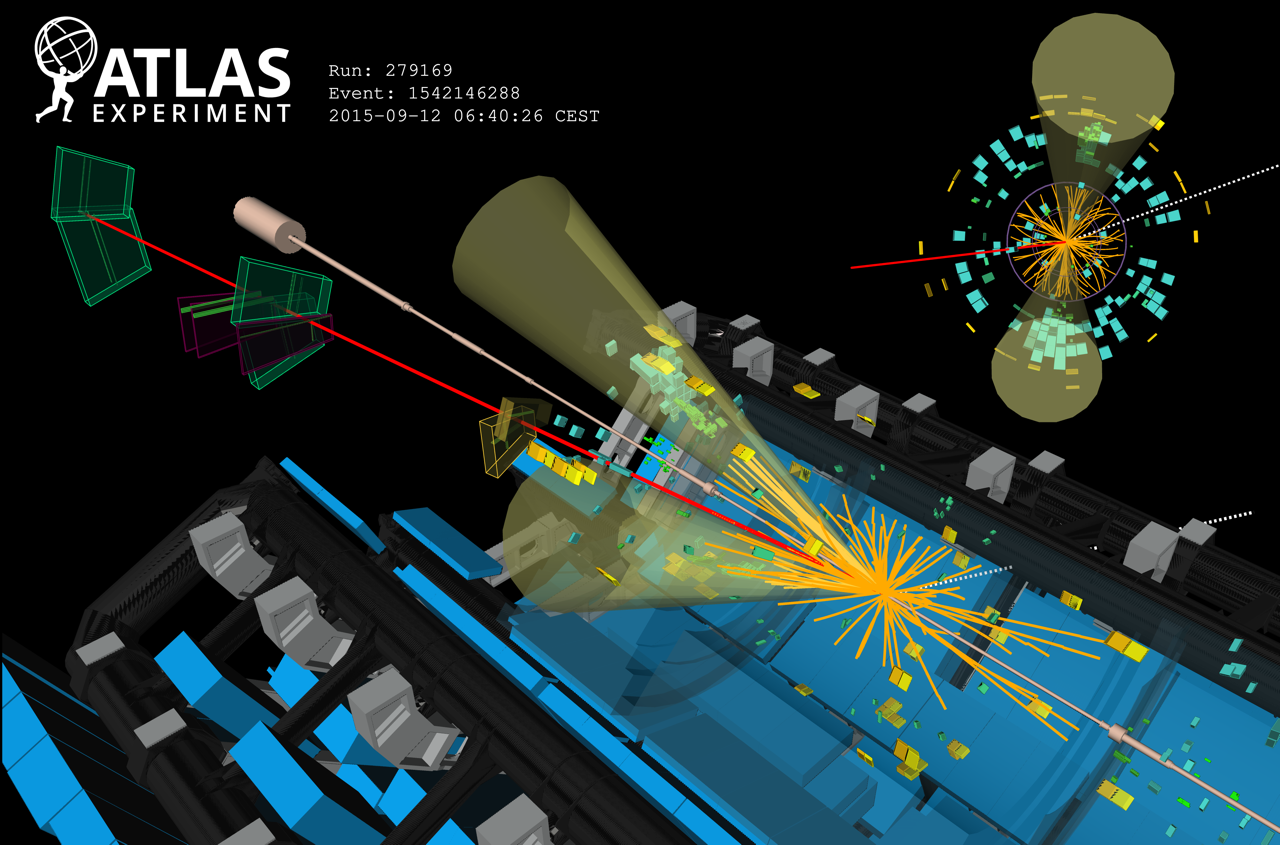

Top secret(s): a detective story at the LHC
16 November 2026 | By
Sometimes the search for new physics feels like a detective story. The clues are hidden in collisions produced by the Large Hadron Collider (LHC), while the suspects are potential signs of new phenomena that could help achieve a more complete understanding of nature. The challenge is to bring together enough evidence to identify the culprit.
A new result from the ATLAS Collaboration takes a fresh approach to this investigation. It puts the heaviest known fundamental particle, the top quark, to work as a powerful investigative tool.
The case: the hunt for new physics
The Standard Model is currently the best theory describing fundamental particles and their interactions. Its predictions have been incredibly successful so far, yet physicists know it to be incomplete as several key questions remain unanswered. Why are we here? What is the origin of the matter-antimatter asymmetry in the Universe? How stable is the Universe at the quantum level?
These questions point to something missing from the current picture of nature. But what is it, and where is it hiding? Interactions involving the top-quark could shed light on these questions.
The evidence: LHC collisions
The crime scene and the associated evidence are all contained in the data! ATLAS detectives sifted through all of the data collected during Run 2 of the LHC (2015 to 2018), studying different ways in which the top quark can be produced and decay (called processes), for example the production of a top-quark pair in association with a W, Z or Higgs boson (ttW, ttZ or ttH). Each process is like a witness who has seen a different part of the story. One witness may provide an important clue, but bringing several witnesses together can reveal a much clearer picture of what really happened.
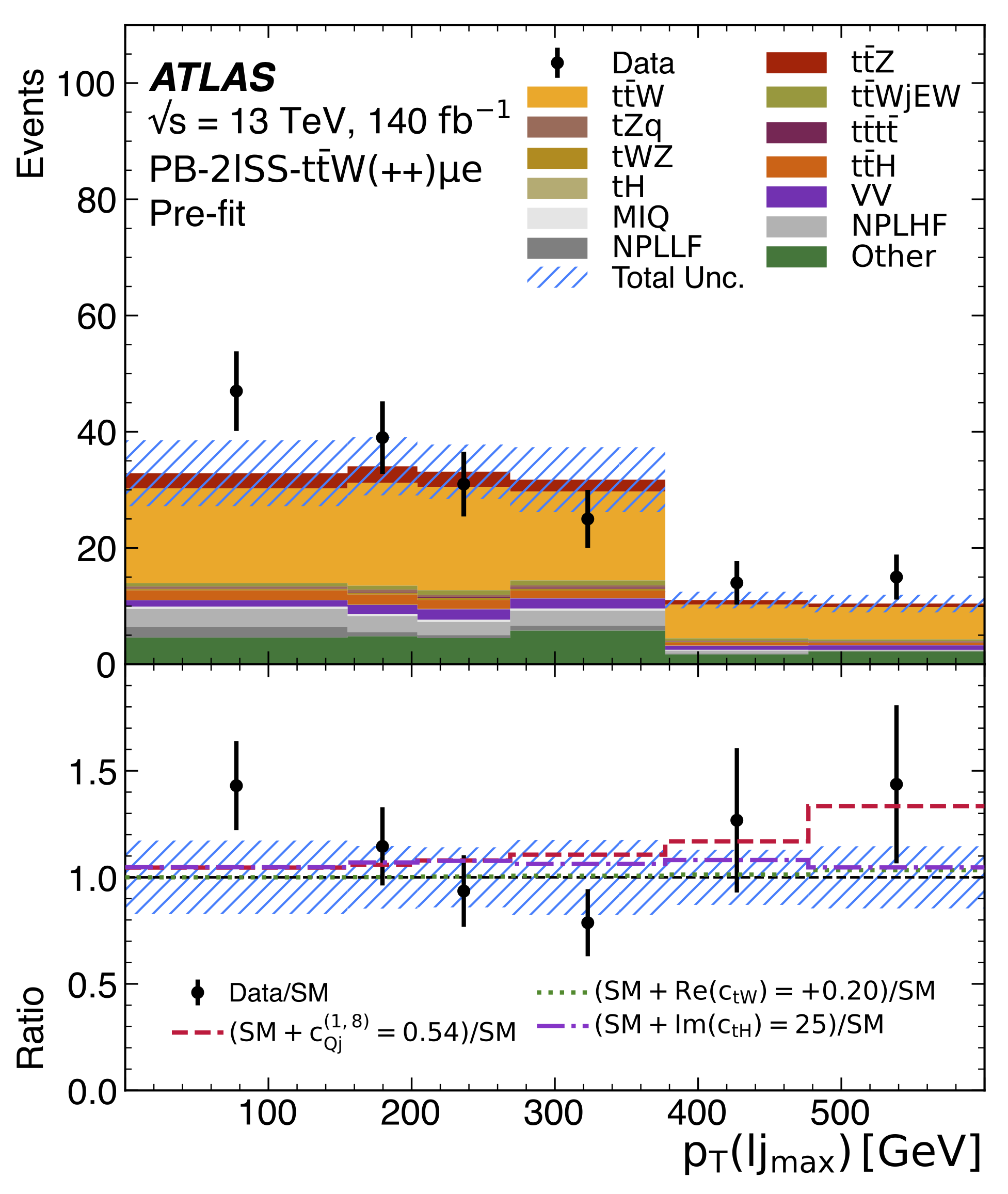
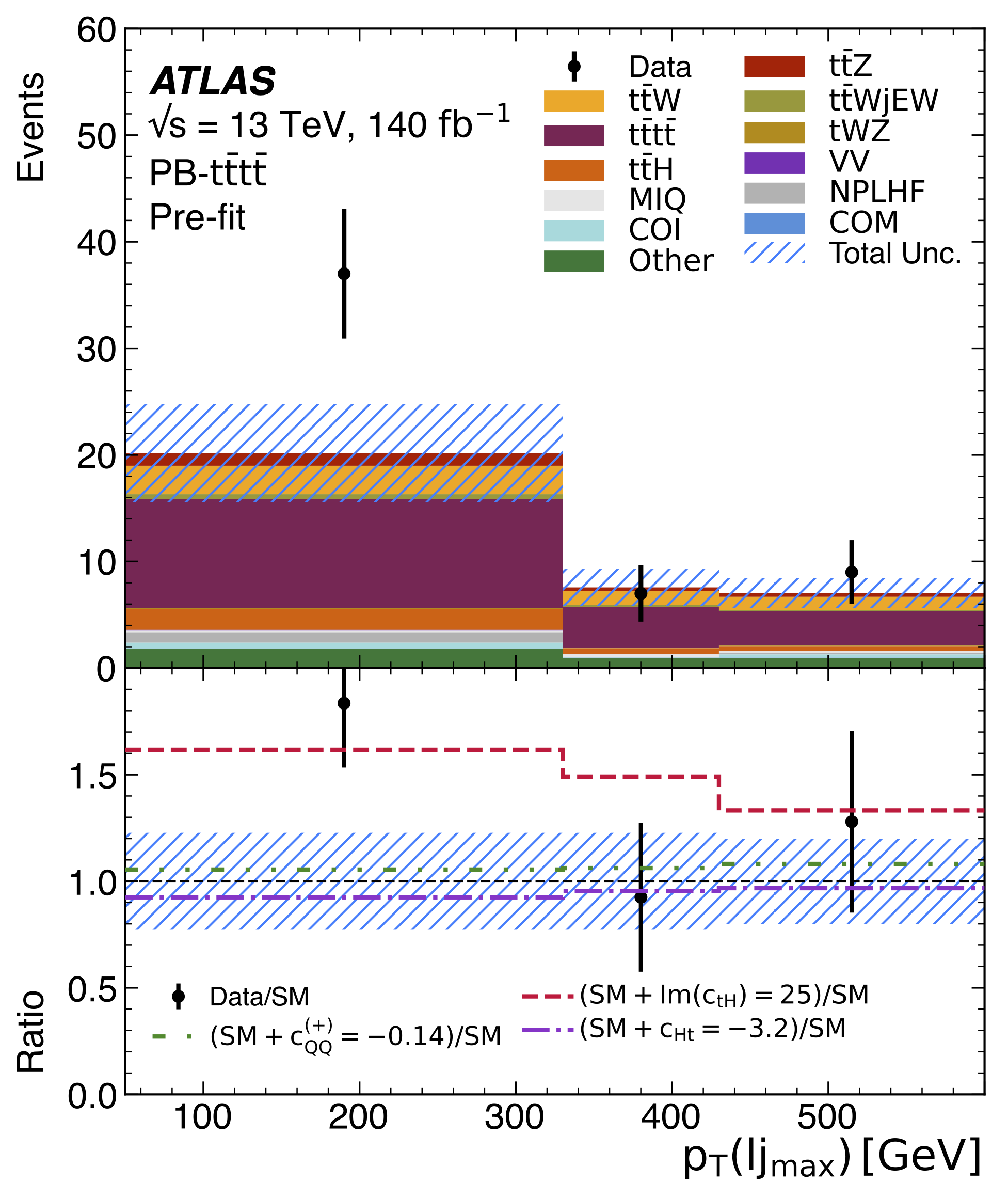
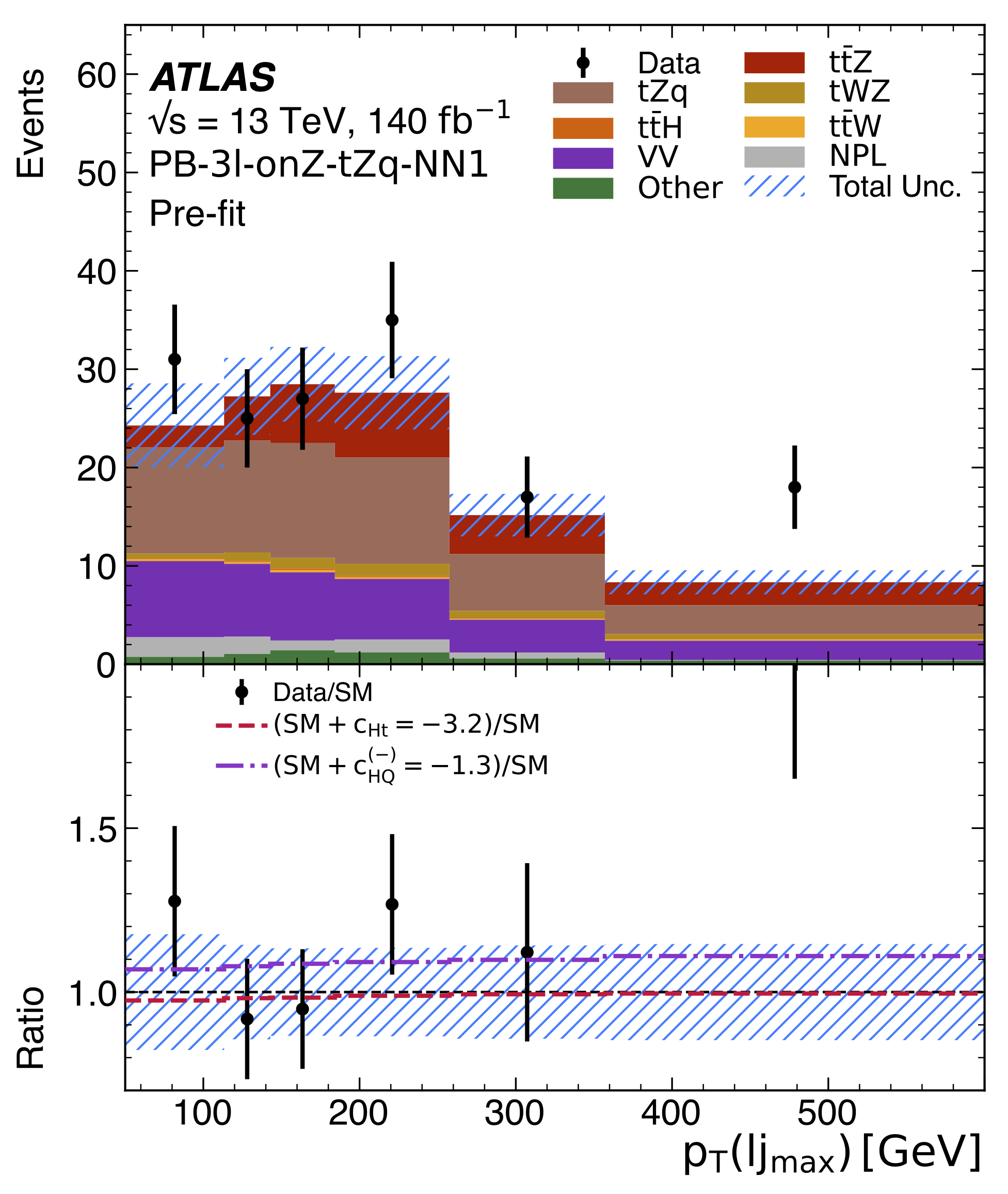
The new ATLAS result demonstrates a novel way to combine evidence and opens the door to more sensitive searches in the future.
The suspects: new interactions
The suspects are the possible ways that top-quark interactions could differ from Standard-Model predictions. ATLAS detectives used a framework called Effective Field Theory to describe these deviations. Rather than focusing on one suspect at a time, the researchers considered many of them together. But ruling out so many suspects may require more witnesses!
The investigation: a tale of two techniques
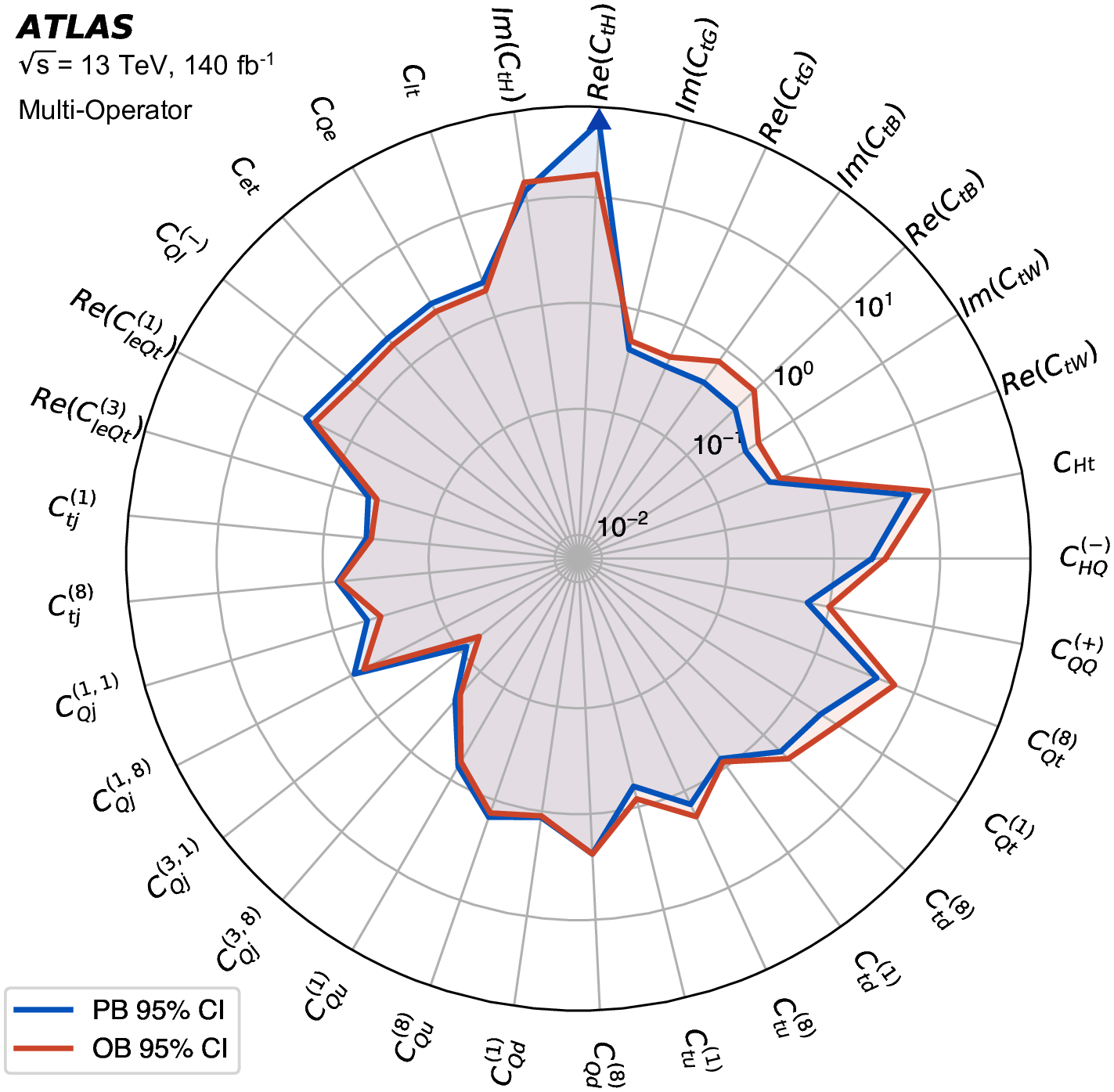
With a huge pile of evidence and a long list of suspects, deciding how to tackle the case was a challenge in itself. ATLAS investigators explored two strategies – one of them developed and implemented for the first time in this new work:
- Strategy #1: Focus on the evidence, one piece at the time, and how it relates to each witness. In this approach researchers categorise collisions using the properties of the reconstructed particles and higher-level objects. This is the Object-Based approach.
- Strategy #2 (new!): Organise the investigation around the witnesses and how they acted, cross-examining them. In this strategy researchers aim to isolate data compatible with each process and then combine their observations into a single interpretation. This is the Process-Based approach.
The verdict: still open
For now, there is no clear culprit. The Standard Model remains consistent with the evidence, and none of the possible new-physics explanations stands out. This new measurement is the most comprehensive of its kind, being able to simultaneously examine 33 new physics scenarios. The ATLAS Collaboration was able to exclude some of these new physics scenarios up to an energy scale of around 3 TeV.
But the investigation has revealed something important: the choice of strategy matters! The Process-Based approach showed the greatest overall potential (see Figure 2), offering a better ability to separate specific suspects from the pile of evidence, i.e. to explore possible new physics with better sensitivity. This is particularly promising when investigating some of the more intriguing tensions seen in the data.
What’s next?
This investigation demonstrates a new way to combine evidence and opens the door to more sensitive searches in the future. The Process-Based approach has emerged as the most promising strategy, providing a valuable starting point for the next investigation.
And more evidence is on the way! The High-Luminosity LHC is expected to deliver an order of magnitude more data. Together with increasingly sophisticated techniques for combining different top-quark processes, this wealth of data will give ATLAS detectives more clues with which to interrogate the suspects.
The case is still open!
Learn more
- Multi-approach Standard Model Effective Field Theory analyses of top-quark associated production in leptonic final states at 13 TeV with the ATLAS detector (arXiv:2611.16347, see figures)
- CERN Seminar presented by T. Stevenson: Charting the Unseen: From Precision Top Measurements to Global SMEFT Fits at ATLAS